Planning a Community Activation Event? Start Here.
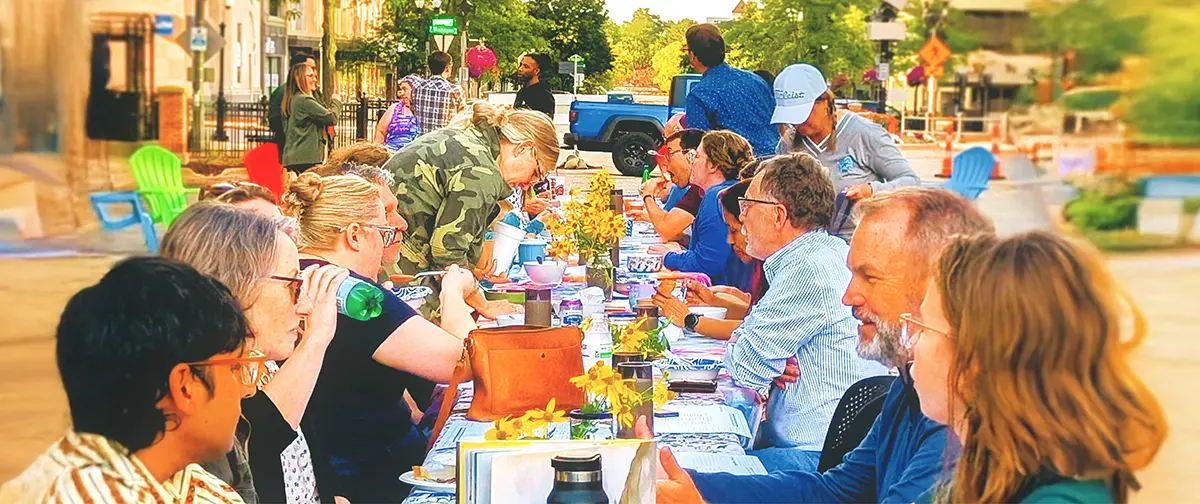

Whether it’s a pop-up market, workshop, festival, or block party in the middle of the street, the goal of a community activation event is simple: Create meaningful, in-person engagement that builds lasting relationships and loyal audiences. From a marketing standpoint, that’s powerful. In fact, 91% of consumers say they feel more positively about a brand after participating in an event experience, and 85% are more likely to make a purchase afterward (The Event Marketing Institute, 2025). For place brands (like cities, community centers, or other spaces for connection) these are like free samples for your place. You draw people in and show them why your community matters.
When done well, community activations can serve as both a marketing moment and an extension of your organization’s placemaking mission. Here’s how to approach one strategically.
1. Start with a clear purpose. (Not just an idea.)
Before you think about logistics, define what success looks like for the event. Are you trying to build awareness? Launch something new? Strengthen relationships with an existing audience?
This goal setting matters more than it sounds. While events can deliver strong returns — with some generating nearly $21 for every $1 spent, for consumer brands — that impact depends heavily on alignment between your goal and your execution (Center for Exhibition Industry Research, 2025). A good rule of thumb: If you can’t measure it, you can’t improve it. Define a few key, trackable metrics up front, whether that’s leads captured, funds raised, or an estimate of total new faces. This will help direct your planning decisions, and can be revisited after the confetti has settled so you can improve next time.
2. Prioritize participation over attendance.
Too many activations focus on getting people in the door, regardless of who and how. The real value comes from reaching people that are aligned with your target audience and values, and then what they do once they’re there.
Research shows that immersive, participatory experiences are the most important element for attendees, with a majority prioritizing interaction over passive observation (Event Marketer, 2025). Think less about programming and more about involvement:
- What can people create, customize, or contribute?
- How does the experience reflect your brand story, and how can you make attendees a part of it?
- What makes the event worth sharing, inspiring attendees to spread the word?
If people are simply watching (rather than participating), you’re missing an opportunity.
3. Curate the right audience.
Bigger isn’t always better. Community activations work best when they feel intentional,connect like-minded individuals, and double check that all corners of your audience feel seen. Some ways to go about this:
- Partner with local organizations or influencers relevant to your brand.
- Create different activations for specific segments of your audience — the nicher, the better. (Shoutout to Krampusnacht, the Festival of Oddities, and all of the other weirdly specific events in Lansing.)
- Build around an existing community, instead of starting from scratch.
4. Extend the experience beyond the moment.
A successful activation doesn’t end when people leave. The whole intention is to get people talking and connect them to your place or brand. Think strategically about how your message can live on through follow-up content and conversation. Plan for shareable moments (interactive photo opportunities or unexpected surprises); harvest content during the event (photos, videos, and testimonials); post-event content (a recap newsletter with testimonials, perhaps); and immediate follow-up for attendees (getting them on your email list, or even sending a handwritten note). The goal is to turn a single experience into an ongoing relationship.
This, of course, ties to the golden rule for community activation event marketing: Take pictures. Lots of pictures.
Community activations sit at the intersection of brands, places, and people. (A few of our favorite things here at Redhead.) But we’ve all been to one where you could tell the idea was there, but the execution was not. Activation events require intention, creativity, and follow-through. With the right planning and strategy, they offer something increasingly rare in place branding and marketing: real connection, in real time, with real impact.
P.S. We all know a good event starts with a calendar. What’s your go-to calendar style? Let us know in our tiny survey.
- Digital all the way. If it’s not synced, it’s not happening.
- Paper planner. It’s the satisfaction of crossing things off.