You Should Extend Your Campaign: The Hidden Cost of Short-Term Marketing for Long-Term Decisions
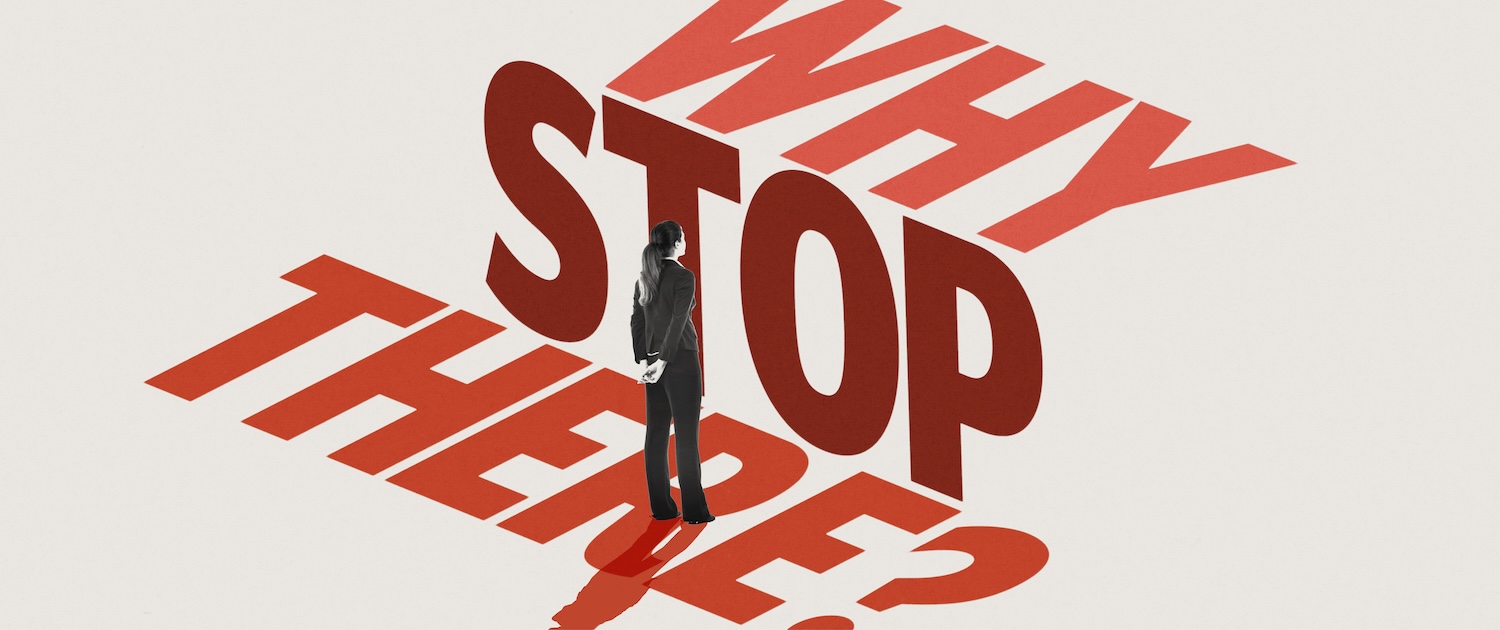

We love a quick mini-campaign as much as the next agency. On the surface, a one-and-done, three-month marketing push makes perfect sense: you can get a visually engaging suite of materials in hand and a dense, high-energy run. If you need your audience to take a quick action, such as registering for an event, applying for a grant, or taking advantage of a limited-time offer, this concentrated burst of promotion can get the job done.
But the calculation changes when the goal calls for bigger-picture actions. Those deep, behavioral shifts that alter a person’s core — changing perceptions, building trust, asking for a significant financial investment, or influencing a substantial lifestyle change — require time and repeat exposure. Depending on the objective, a short-term campaign can be for naught without the right long-term plan.
Realistic solutions for limited time and budgets
At Redhead, many organizations come to us with specific funding designated for a short-term campaign around an important issue. The budget may cover six weeks of advertising, a few months of social media, or one seasonal push. Many times, this structure is a good fit. Budgets are what budgets are, and we aim to make the most of them.
Still, we can’t help but see the potential of expanding these for the long term. When campaigns call for major lifestyle decisions or perception shifts, short sprints often don’t give the audience enough time, repetition, or context to move from awareness to action.
Consider how complicated even an everyday consumer purchase can be. Research from Google and Verto Analytics found that the average online shopping journey involved more than 140 touchpoints that could influence what people bought and from whom. Google research on complex decisions has also found that people may conduct multiple searches and interact with numerous sources before making a decision.
Now consider asking someone to shift an everyday habit, or change their mind about a deeply held belief. A person may need to see a message several times before a message becomes familiar, remember it later when a relevant decision comes up, and encounter it again when they are ready to act.
That’s where recurring campaigns can create value that a short-term campaign cannot.
A campaign that sticks
For example, consider Michigan Fitness Foundation’s “Healthy Choices Catch On” campaign. The organization’s marketing efforts encourage Michiganders to eat healthy and move more, using a mix of billboards, transit advertising, digital media, and more channels.
Over several years, the campaign’s repeated messaging and visuals have become familiar across the entire state. Its eggs are not in one basket; if an audience member missed the message in August, they likely caught it in September. That consistency gives the campaign something a single flight cannot buy: repeat recognition and trust.
Evidence supports this. A 2026 Nielsen analysis found that campaigns running for 10 or more weeks, or reaching people at higher weekly frequency, produced significantly greater sales lift in the campaigns studied.
While we understand that most campaigns don’t have the opportunity to expand over nearly a decade like this one, the lesson still applies at any budget. Even a modest campaign can benefit from giving a strong message enough time and repetition to become familiar. The goal is to make the investment you can afford work as hard as possible, building on what you create today rather than starting over with every new campaign.
The added ROI of extending a campaign
Short-term campaigns work well when there is a clear deadline, a specific action, and a relatively clear path between seeing the message and taking action.
For bigger behavioral or awareness goals, recurring campaigns deserve a different conversation. The question becomes less about how much we can accomplish in one campaign and more about how we can build recognition and momentum over time.
Our recommendation? Starting short does not mean you have to stay short. Beginning with a short-push campaign can give your team a chance to measure reach, engagement, and response before deciding whether to extend it. If the campaign is working, you can build on that foundation by extending the timeline, adding markets, or introducing new channels.
The biggest sunk-cost investment in a campaign often happens upfront: developing the strategy, theme, messaging, content, and visual system. Once those pieces are in place, expanding the campaign can become significantly more cost-effective over time, building from an established creative foundation rather than starting from scratch. Your short-term campaign also offers invaluable fodder to pitch for additional funding, showing demonstrated success and a visual proof-of-concept.
When you consider your short-term campaign from a long-term mindset, this stage can become the first chapter of a long-standing effort toward shifting audience perceptions.